
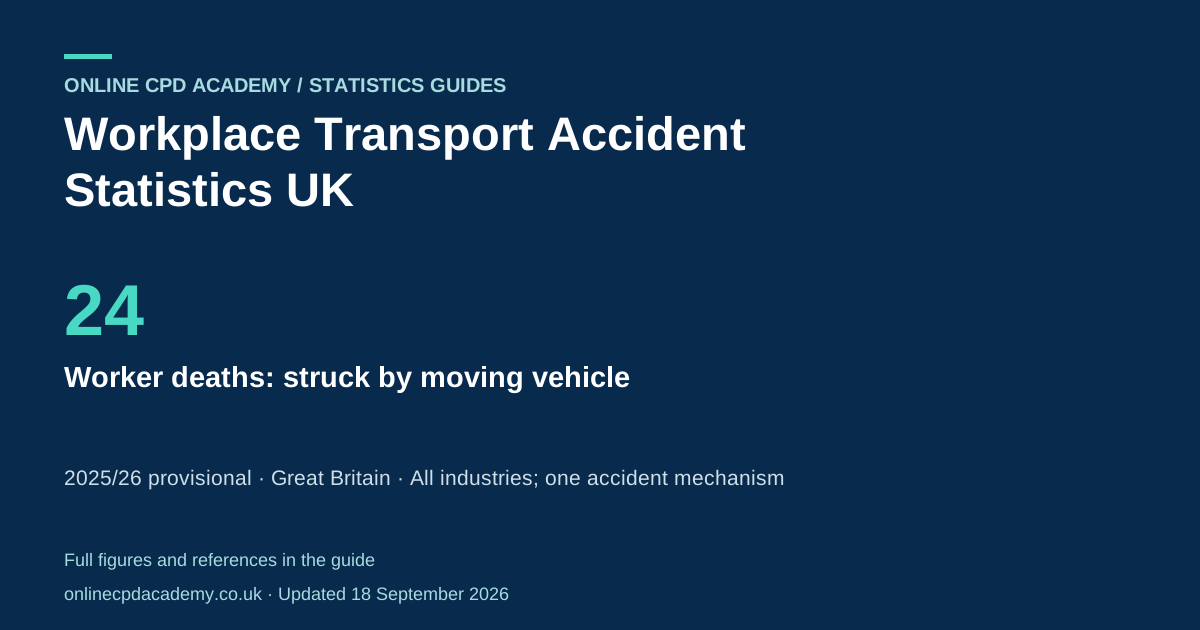
Moving vehicles killed 24 workers in Great Britain in 2025/26, according to provisional HSE figures. Being struck by a moving vehicle accounted for around 19% of all 126 worker fatalities that year.
Key statistics at a glance
| Statistic | Figure | Period and coverage |
|---|---|---|
| Worker deaths: struck by moving vehicle | 24All industries; one accident mechanism | 2025/26 provisional Great Britain |
| Share of all worker deaths involving a moving-vehicle strike | 19.0%Calculated as 24 of 126 worker fatalities | 2025/26 provisional Great Britain |
Provisional HSE figures for April 2025–March 2026, Great Britain. The main measure counts workers struck by moving vehicles across all industries. Other transport events, including overturns and falls from vehicles, can fall in different accident categories.
Moving vehicles accounted for around one in five worker deaths
HSE’s provisional figures record 24 workers killed after being struck by a moving vehicle in 2025/26. This represents a calculated 19.0% of the 126 worker deaths across all industries.
The measure focuses on the accident mechanism. Other transport-related deaths, such as vehicle overturns or falls from a vehicle, may be recorded under different mechanisms.
Transport and storage industry figures
There were 15 worker deaths in transportation and storage in 2025/26. This industry count covers every included accident mechanism, while the 24 moving-vehicle deaths span industries.
The groups can overlap. Together they provide two views of the problem: where a person worked and how the fatal injury happened.
Historical workplace transport estimates
HSE’s 2014 workplace transport guide, HSG136, gives a broad estimate of around 50 people killed and more than 5,000 injured each year. This is historical background from the third edition of the guidance.
The latest moving-vehicle figure is a narrower, dated fatality measure. Differences in scope and period mean it cannot be used alone to calculate a change from the older broad estimate.
Forklifts and other site vehicles
Forklifts are one part of workplace transport, alongside other vehicles and mobile equipment used around sites. The moving-vehicle total is not broken down into a forklift-only annual count here.
HSE’s lift-truck guidance covers operator training, safe use and thorough examination. Assessment should consider how the vehicle, the driver and the site interact, including visibility, pedestrians, loads and space to manoeuvre.
Workplace transport and public roads
Workplace transport concerns vehicles and mobile equipment used in work settings. Public-road movement is usually governed by road traffic law, while activities such as roadside deliveries and roadworks can also engage health-and-safety duties.
Road casualty statistics and workplace injury records have different coverage. Many work-related road collisions therefore sit outside HSE’s workplace fatality series.
Separating pedestrians and vehicles
HSE recommends separating pedestrian and vehicle routes wherever possible. Useful measures include separate entrances, barriers, controlled crossing points and good visibility wherever routes meet. Delivery drivers and visitors also need clear information about the layout.
Following a delivery from arrival to departure can reveal practical risks: where the driver leaves the cab, how people cross the route, and how reversing and loading are controlled. Site design should address those interactions.
Frequently asked questions
How many workers were killed by moving vehicles?
HSE provisionally recorded 24 workers killed after being struck by moving vehicles in Great Britain in 2025/26. That was 19.0% of all worker fatalities.
Does that include every workplace transport death?
It covers moving-vehicle strikes. Events such as overturns and falls from vehicles can appear in different accident categories, so the figure has a narrower scope than all workplace transport.
Which measures help prevent workplace transport injuries?
HSE prioritises suitable sites, vehicles and drivers. Separating people and vehicles, controlling reversing and loading, ensuring visibility and providing appropriate training are central measures.
Using these statistics?
Please credit Online CPD Academy and link to this guide when using these statistics in an article, report or website.
Suggested citation: Online CPD Academy, Workplace Transport Accident Statistics UK: HSE Data, updated 18 September 2026.
Sources
From food hygiene and fire safety to first aid, mental health and more, we offer a wide range of accredited, online courses you can start today.
Browse all 22 accredited courses →
Mark writes about workplace health and safety, compliance and accredited training for Online CPD Academy, the UK's leading online training company.