
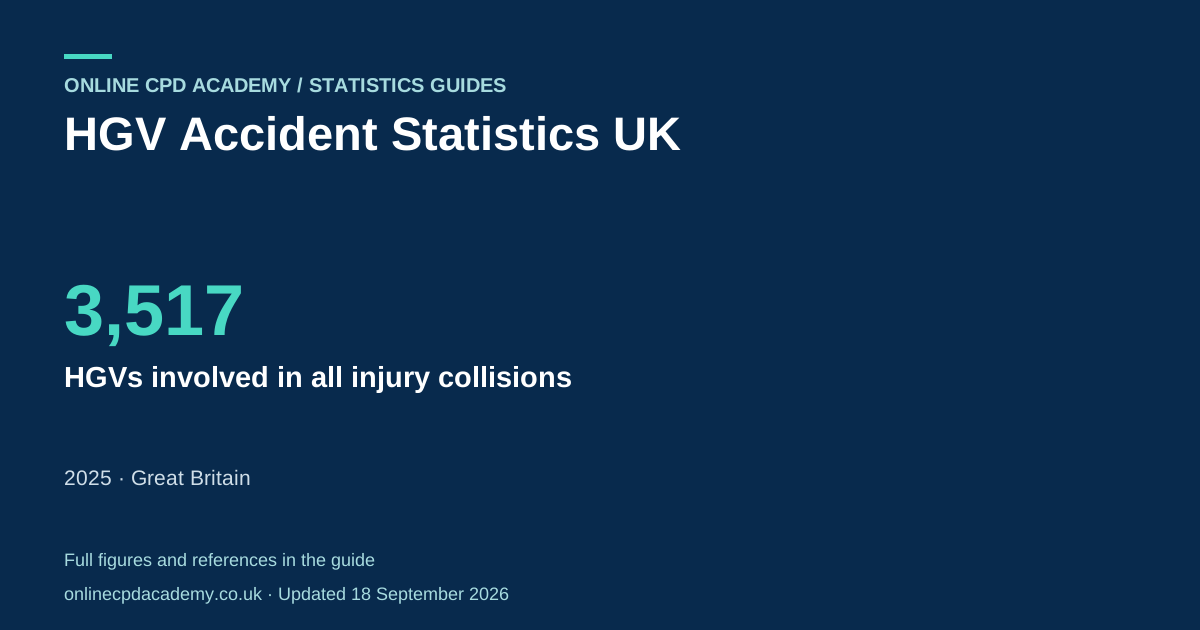
In 2025, 3,517 heavy goods vehicles were involved in police-reported injury collisions in Great Britain, including 186 HGVs in fatal collisions. These are counts of vehicles involved, not distinct collisions or deaths.
Key statistics at a glance
| Statistic | Figure | Period and coverage |
|---|---|---|
| HGVs involved in all injury collisions | 3,517 | 2025 Great Britain |
| HGVs involved in fatal collisions | 186 | 2025 Great Britain |
| HGVs involved in fatal or serious collisions | 1,034 | 2025 Great Britain |
| Fatal collision involvement rate | 11 per billion vehicle milesVehicle-based rate, rounded. | 2025 Great Britain |
| HGV occupant fatalities | 10Occupants only; excludes other road users killed in HGV-involved collisions. | 2025 Great Britain |
| All HGV occupant casualties | 603 | 2025 Great Britain |
Great Britain, 2025 police-reported injury collisions. Vehicle-involvement counts can include more than one HGV in the same collision. London scheme requirements have a separate geographic scope.
HGV collisions, vehicle involvements and casualties
A collision involving two lorries counts as one collision but two HGV involvements. This is why the 3,517 HGVs involved in injury collisions in 2025 describe vehicles rather than distinct accidents.
There were 186 HGV involvements in fatal collisions and 10 deaths among HGV occupants. The occupant figure covers people inside the lorry; DfT reports that most people killed in collisions involving HGVs are other road users.
HGV and car collision rates
HGVs had a rounded fatal collision involvement rate of 11 per billion vehicle miles in 2025, compared with 6 for cars. For injury collisions of all severities, the rates were 215 for HGVs and 484 for cars.
The pattern differs by severity: HGVs had a lower overall injury-collision involvement rate but a higher fatal-collision involvement rate. These vehicle-based comparisons describe involvement, with routes, exposure and other road users affecting the outcomes; they do not assign driver fault.
London’s Direct Vision Standard
HGVs over 12 tonnes gross vehicle weight need an HGV safety permit to enter or operate in the scheme area, which covers most of Greater London. Since 28 October 2024, vehicles require at least a three-star Direct Vision Standard rating or the Progressive Safe System.
The scheme addresses visibility and safety equipment. Its permit requirements apply to London separately from the Great Britain casualty statistics above.
Driver CPC training requirements
Professional lorry drivers generally need 35 hours of periodic Driver CPC training every five years, subject to official exemptions. The type of work determines whether National or International Driver CPC is needed.
Fatigue and journey planning
Managing fatigue involves realistic schedules, adequate rest, fitness-to-drive arrangements and journey planning. Employers should assess the driver, journey and vehicle together, including whether time pressure or the planned working pattern could make a journey unsafe.
Frequently asked questions
How many HGVs were involved in injury collisions in 2025?
3,517 HGVs were involved in police-reported injury collisions in Great Britain. A collision involving two HGVs contributes two vehicle involvements.
How many HGVs were involved in fatal collisions?
186 HGVs were involved in fatal collisions in Great Britain in 2025. This measures vehicle involvement rather than the number of people killed.
How many HGV occupants died in 2025?
10 HGV occupants died in Great Britain. Other road users killed in HGV-involved collisions are counted in their own road-user categories.
Using these statistics?
Please credit Online CPD Academy and link to this guide when using these statistics in an article, report or website.
Suggested citation: Online CPD Academy, HGV Accident Statistics UK: 2025 Data & Safety (2026), updated 18 September 2026.
Sources
From food hygiene and fire safety to first aid, mental health and more, we offer a wide range of accredited, online courses you can start today.
Browse all 22 accredited courses →
Mark writes about workplace health and safety, compliance and accredited training for Online CPD Academy, the UK's leading online training company.