RoSPA approved
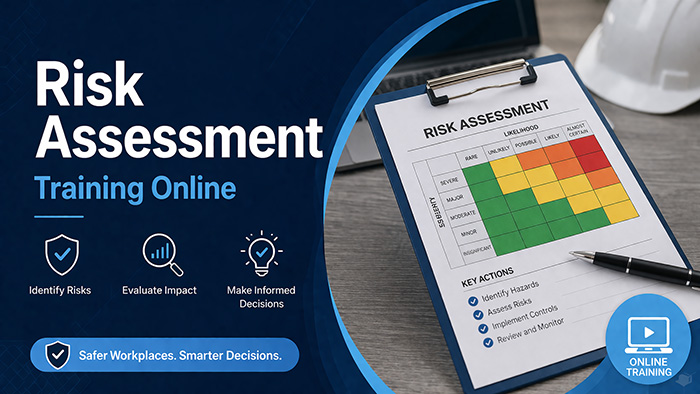
Risk Assessment Training
A clear, practical understanding of how to carry out workplace risk assessments and control hazards effectively.
£14.00

A RoSPA approved online COSHH awareness course that helps employees and employers understand the risks of hazardous substances at work and how to manage them safely — covering the COSHH Regulations 2002, risk assessment and the hierarchy of control.

COSHH — the Control of Substances Hazardous to Health Regulations 2002 — is one of the most important pieces of workplace health and safety legislation in the UK. It applies to any workplace where employees may be exposed to hazardous substances, including chemicals, cleaning products, dusts, fumes, vapours, biological agents, and many other materials encountered in day-to-day work.
Suitable for all UK workplaces — including cleaning, catering, manufacturing, construction, healthcare, laboratories, salons, agriculture, and office environments — this course covers what hazardous substances are, how they enter the body, the health effects of exposure, COSHH risk assessment, control measures, safety data sheets, GHS and CLP hazard symbols, personal protective equipment, safe storage and disposal, workplace exposure limits, and emergency procedures. It supports compliance with the COSHH Regulations 2002, the Health and Safety at Work etc. Act 1974, and wider workplace health and safety requirements.
The course is delivered fully online, allowing learners to complete training at their own pace. Upon successful completion, learners receive a digital COSHH Awareness Certificate, accredited by RoSPA and CPD, providing recognised evidence of training.
There are no formal entry requirements for this course. No prior learning, pre-course reading, or previous health and safety qualifications are required.
By the end of this COSHH training you'll be able to understand and apply:
This COSHH training course is RoSPA certified and ensuring it meets recognised standards for quality and relevance. It is developed in line with the COSHH Regulations 2002, current HSE guidance, and the GHS/CLP labelling system, making it suitable for a wide range of job roles and industries.
Training material is delivered through structured modules with clear explanations, practical examples, and defined learning outcomes — so staff can complete it on any device in around 30 minutes.

This COSHH awareness course is delivered through 14 structured modules, each focusing on a key aspect of working safely with hazardous substances. You can work through them at your own pace and revisit any topic as often as you need.
This opening module explains what COSHH — the Control of Substances Hazardous to Health — actually means and why it sits at the heart of UK workplace health and safety. It sets out the purpose of the regulations, the kinds of workplaces they apply to, and how this awareness training will help you recognise and manage the risks posed by hazardous substances at work.
Here you'll learn what counts as a hazardous substance under COSHH, from everyday cleaning products and paints to dusts, fumes, vapours, gases and biological agents. The module helps you identify the substances likely to be present in your own workplace, which is the essential first step in controlling exposure and keeping staff safe.
This module covers the four ways hazardous substances can enter the body — inhalation, skin contact or absorption, ingestion, and injection. Understanding each route helps you appreciate how exposure happens during routine tasks and why the right controls and protective measures are chosen to interrupt them before harm occurs.
Exposure to hazardous substances can cause both immediate and long-term harm, from skin irritation and breathing difficulties to occupational asthma, dermatitis and other chronic conditions. This module explains the difference between acute and chronic effects so you can take the risks seriously and understand why prevention matters so much in the workplace.
This module sets out the legal framework, focusing on the Control of Substances Hazardous to Health Regulations 2002 and how they fit alongside the Health and Safety at Work etc. Act 1974. You'll understand the core legal duties placed on employers and the standard of control the law expects in any workplace using hazardous substances.
COSHH compliance is a shared responsibility. This module explains what employers must do to assess and control risks and provide information, instruction and training, as well as the duties employees have to follow safe systems of work and use the controls provided. Knowing your role helps create a safer working environment for everyone.
A COSHH risk assessment is the practical tool used to identify hazardous substances, judge who might be harmed and decide on suitable controls. This module walks you through the assessment process step by step — identifying substances, checking safety data sheets, evaluating risk, recording findings and reviewing them — so you can see how exposure is managed in practice.
This module introduces the hierarchy of control, the structured approach to reducing exposure that prioritises elimination and substitution before engineering controls, safe systems of work and personal protective equipment. You'll learn why PPE is treated as a last line of defence and how to select the most effective control measures for the task in hand.
Safety data sheets and product labels carry vital information about the substances you work with. This module shows you how to read and interpret a safety data sheet and how to recognise the standardised GHS and CLP hazard pictograms — such as flammable, corrosive and toxic — so you can quickly understand the dangers and handle products correctly.
This module explains the role of personal protective equipment in COSHH compliance, covering common types such as gloves, respiratory protection, eye protection and protective clothing. You'll learn why PPE must be suitable for the substance and task, properly fitted, well maintained and used correctly to provide reliable protection against hazardous substances.
Storing, handling and disposing of hazardous substances safely is essential for preventing spillages, contamination and harm. This module covers good practice for keeping substances secure and correctly labelled, handling them safely during use, and disposing of them in line with the relevant requirements to protect both people and the environment.
This module explains workplace exposure limits and how they help keep exposure to hazardous substances within safe levels. It also covers health surveillance — the ongoing monitoring of workers' health where there is a risk of harm — so you understand how employers detect early signs of ill health and confirm that control measures are working.
Even with good controls in place, accidents can happen. This module covers what to do in the event of a spillage, exposure or other emergency involving hazardous substances, including raising the alarm, containing the situation safely and following first aid and reporting procedures. Knowing how to respond quickly and calmly helps limit harm and keep colleagues safe.
The course ends with a multiple-choice final assessment that checks your understanding of the key COSHH topics covered throughout the modules. Passing the assessment confirms you've grasped the essentials of working safely with hazardous substances and unlocks your RoSPA accredited COSHH Awareness Certificate.

To earn your COSHH Awareness Certificate, you'll complete a multiple-choice final assessment with a pass mark of 80%. If you're not successful first time, retakes are included at no extra cost — you can take the assessment as many times as you need until you pass.
Upon successfully passing, you'll receive an instant digital COSHH Awareness Certificate confirming RoSPA and CPD accreditation. Certificates are issued immediately upon successful completion and can be downloaded, printed, or stored electronically as part of your training records. The certificate provides recognised evidence of training for employers, auditors, insurers and enforcement bodies, with no need to wait for anything in the post.
Exposure to hazardous substances causes thousands of cases of occupational ill health in the UK every year, including dermatitis, occupational asthma, chronic obstructive pulmonary disease (COPD), and cancer. COSHH applies to far more workplaces than most people expect — anyone using cleaning products, adhesives, paints, solvents, or working where dust or fumes are present is likely to be covered. This course is ideal for:
Need to evidence a wider safety system? Pair this with our Risk Assessment Training or, for sites with ACMs, the Asbestos Awareness (Category A) course.
Buy, assign and manage COSHH training across your whole team — all from one place.
Discounts apply automatically at checkout and scale with your order. Mix and match different courses across your team — the discount applies to your whole basket.
Buy the licences you need now and assign them to staff whenever it suits — add team members by email and they'll get their own login.
A simple manager dashboard shows who has started, who's in progress and who has passed — so you can follow up before an inspection.
Download every team member's certificate from one account and export a training record for inspections or internal audits.
Pay by card for instant access, or get in touch about invoicing and purchase orders for larger team orders.
Our team is on hand to help with enrolments, dashboards and invoicing. Call 0800 852 7229.
 .Bulk pricing & team discounts
The more licences you buy, the more you save — and discounts apply across your whole order, including mixed courses.
Discounts are applied automatically at checkout based on your total quantity.
No — your course credits never expire until they're used. Buy now and assign them to staff whenever you're ready.
COSHH stands for the Control of Substances Hazardous to Health. COSHH training teaches employees how to identify hazardous substances in the workplace, understand the health risks they present, and follow the correct procedures for safe handling, storage, and disposal. It covers the COSHH Regulations 2002, COSHH risk assessment, control measures, safety data sheets, hazard symbols, and what to do in the event of exposure or a spillage. This is awareness-level training — it gives staff the knowledge they need to work safely around hazardous substances.
Yes. The Control of Substances Hazardous to Health Regulations 2002 (COSHH) require employers to assess and control the risks from hazardous substances in the workplace. Regulation 12 specifically requires employers to provide suitable and sufficient information, instruction, and training to employees who are or may be exposed to hazardous substances. This applies to a far wider range of workplaces than most people realise — cleaning products, paints, adhesives, dust, fumes, and biological agents all fall under COSHH. If your employees come into contact with any of these, COSHH training is a legal obligation.
COSHH covers a wide range of hazardous substances including chemicals, products containing chemicals (such as cleaning agents, paints, adhesives, and solvents), fumes, dusts (including wood dust and flour dust), vapours, mists, gases, biological agents (bacteria, viruses, and fungi), and nanotechnology materials. It does not cover lead, asbestos, or radioactive substances, which have their own specific regulations. In practice, most workplaces — from offices using cleaning sprays to factories handling industrial chemicals — will have substances that fall under COSHH.
A COSHH risk assessment is a structured evaluation carried out by the employer to identify which hazardous substances are present in the workplace, how employees might be exposed, and what control measures are needed to prevent or reduce that exposure. It involves identifying the substances, checking safety data sheets, assessing who might be harmed and how, evaluating the level of risk, deciding on appropriate controls, recording the findings, and reviewing the assessment regularly. This course explains the COSHH risk assessment process step by step.
A safety data sheet (SDS) is a document provided by the manufacturer or supplier of a chemical product that contains detailed information about the substance, including its hazards, safe handling procedures, storage requirements, first aid measures, and emergency response guidance. Hazard symbols — now standardised under the GHS (Globally Harmonised System) and CLP (Classification, Labelling and Packaging) regulations — are the red-bordered diamond-shaped pictograms found on product labels that indicate the type of hazard present, such as flammable, corrosive, toxic, or harmful. This course explains how to read and interpret both.
There are four main routes by which hazardous substances can enter the body: (1) Inhalation — breathing in dusts, fumes, vapours, mists, or gases. This is the most common route of exposure in the workplace. (2) Skin contact or absorption — direct contact with the substance or absorption through the skin. (3) Ingestion — swallowing the substance, often through contaminated hands or food. (4) Injection — the substance entering the body through a cut, puncture wound, or needle. This course explains each route clearly and how to protect against them.
Yes. This course is fully accredited by the Royal Society for the Prevention of Accidents (RoSPA) and the CPD Certification Service. The content has been independently reviewed and meets recognised standards for structured professional development. The dual accreditation provides strong, credible evidence of training for employers, auditors, insurers, and enforcement bodies.
Yes. The course is delivered entirely online. There are no scheduled sessions, classroom attendance, or booking required — you can start immediately after purchase and complete the training at a time and pace that suits you. You can pause at any point and pick up where you left off, making it easy to fit around a busy working day or shift pattern.
The course takes approximately 30 minutes to complete. There are no time restrictions, so you can work through it at your own speed. This makes it practical for staff induction, refresher training, or rolling out COSHH awareness across an entire team without disrupting operations.
Yes. Upon successfully passing the final assessment, you will receive an instant digital COSHH Awareness Certificate confirming RoSPA and CPD accreditation. The certificate can be downloaded, printed, or stored electronically as part of your training records. There is no need to wait for anything in the post — your certificate is available immediately after you pass.
The certificate does not carry a fixed expiry date. However, the HSE recommends that COSHH training is refreshed regularly to ensure employees remain aware of the risks and know how to follow current safe working procedures. Many employers and industry standards require annual refresher training, particularly where employees are regularly exposed to hazardous substances. Given the low cost and short duration of this course, annual refresher training is a simple and effective way to stay compliant.
Other accredited Health & Safety courses teams often take alongside COSHH.
A clear, practical understanding of how to carry out workplace risk assessments and control hazards effectively.
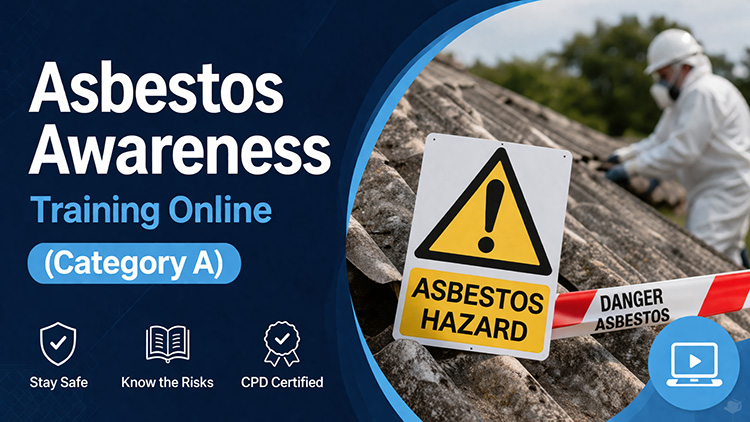
Understand the risks of asbestos-containing materials and how to avoid disturbing them at work.

Meet UK manual handling requirements — covering risks, safe lifting techniques and the law for any workplace.
Instant access, learn at your own pace, and download your RoSPA accredited COSHH Awareness Certificate the moment you pass — for just £14 per learner.
Pick any mix of courses. Discounts apply automatically based on total seats.
Add 10 or more seats to unlock 10% off.