
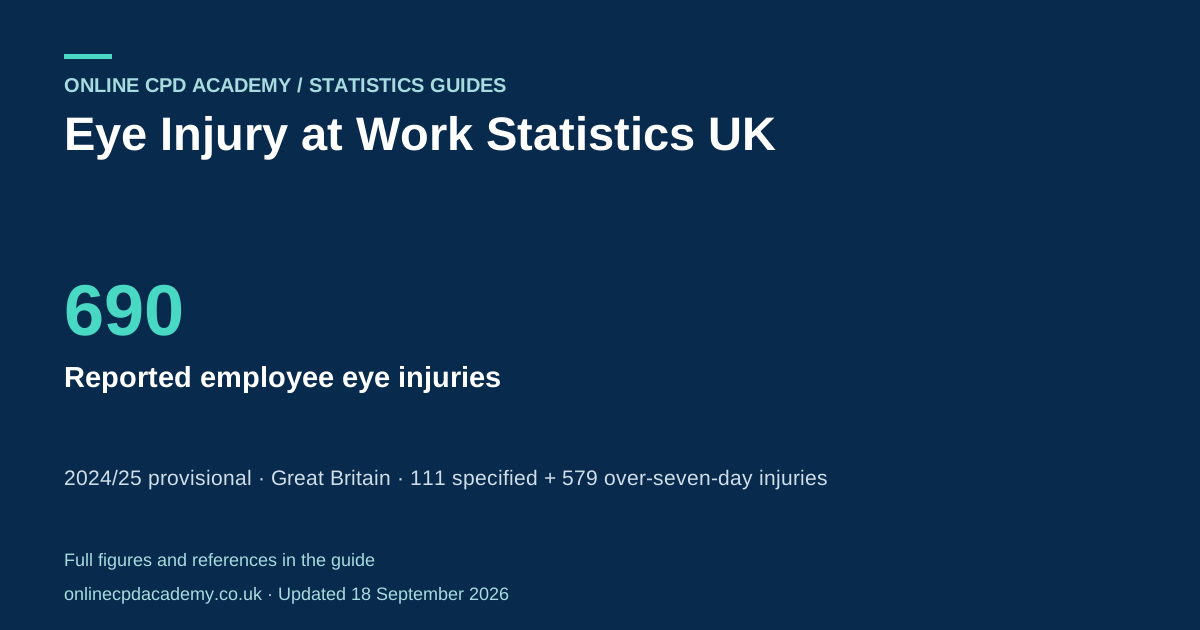
Employers reported 690 non-fatal employee eye injuries in Great Britain in 2024/25: 111 specified injuries and 579 injuries causing more than seven days of incapacity. These provisional HSE figures count reported cases, not every eye injury at work.
Key statistics at a glance
| Statistic | Figure | Period and coverage |
|---|---|---|
| Reported employee eye injuries | 690111 specified + 579 over-seven-day injuries | 2024/25 provisional Great Britain |
| Reported employee eye injuries | 747100 specified + 647 over-seven-day injuries | 2023/24 revised Great Britain |
| Reported employee eye injuries | 72198 specified + 623 over-seven-day injuries | 2022/23 Great Britain |
HSE RIDSITE Table 2: non-fatal employee eye injuries reported under RIDDOR in Great Britain. Figures exclude Northern Ireland and self-employed non-fatal injuries. The November 2025 workbook labels 2024/25 provisional and 2023/24 revised. From 2024/25, the series also excludes workplaces enforced by the Office for Nuclear Regulation, which limits comparisons with earlier years.
Reported workplace eye injuries fell by 7.6%
The provisional 2024/25 total of 690 reported eye injuries is 57 below the revised 2023/24 count of 747, a calculated decrease of 7.6%. The 2022/23 count was 721. HSE changed the series coverage in 2024/25 to exclude workplaces enforced by the Office for Nuclear Regulation, so the fall is not a fully like-for-like comparison.
The latest decline was concentrated in injuries causing over seven days of incapacity: those reports fell from 647 to 579. Specified injuries increased from 100 to 111. The total and the more serious injury category therefore moved in different directions.
Which eye injuries are reportable?
RIDDOR treats an injury likely to cause permanent loss or reduction of sight as a specified injury. Serious burns affecting the eyes can also qualify. Other physical injuries may be reportable when they prevent normal work for more than seven consecutive days.
The table covers injuries meeting those criteria and reported by employers. Minor injuries, unreported cases and general eye discomfort fall outside this measure. HSE acknowledges underreporting in its non-fatal injury series but does not supply an eye-specific reporting rate.
Eye strain during screen work
Prolonged display-screen work can cause tired eyes and headaches. HSE says it does not cause permanent eye damage. These symptoms are measured differently from accident injuries reported under RIDDOR.
Employers must assess workstations and provide an eye test for qualifying DSE users who request one. They must also pay for special screen-distance glasses when ordinary glasses are unsuitable.
Preventing eye injuries at work
Start with the task and the exposure: flying particles, chemical splashes and other hazards need suitable controls. HSE treats personal protective equipment as the final line of protection after more effective measures have been considered.
Eye protection needs to suit the hazard, fit the wearer, work with other protective equipment and remain in good condition. Ordinary prescription glasses should not be assumed to provide industrial eye protection.
Frequently asked questions
How many workplace eye injuries are reported each year?
HSE recorded 690 non-fatal employee eye injuries in Great Britain in 2024/25, provisionally. It is a RIDDOR reporting count, not an estimate of every workplace eye injury.
Are workplace eye injuries rising or falling?
The reported total fell by 7.6% between 2023/24 and 2024/25, from 747 to 690. Specified injuries increased from 100 to 111, while over-seven-day injuries fell. The latest year excludes workplaces enforced by the Office for Nuclear Regulation, so the comparison has a coverage change.
Does an eye injury always need a RIDDOR report?
No. Reporting depends on the applicable legal criteria, including likely permanent sight damage, other specified injuries or more than seven days of incapacity for normal work.
Using these statistics?
Please credit Online CPD Academy and link to this guide when using these statistics in an article, report or website.
Suggested citation: Online CPD Academy, Eye Injury at Work Statistics UK: HSE Data and Reporting, updated 15 October 2026.
Sources
From food hygiene and fire safety to first aid, mental health and more, we offer a wide range of accredited, online courses you can start today.
Browse all 22 accredited courses →
Mark writes about workplace health and safety, compliance and accredited online training for Online CPD Academy. About Online CPD Academy.