
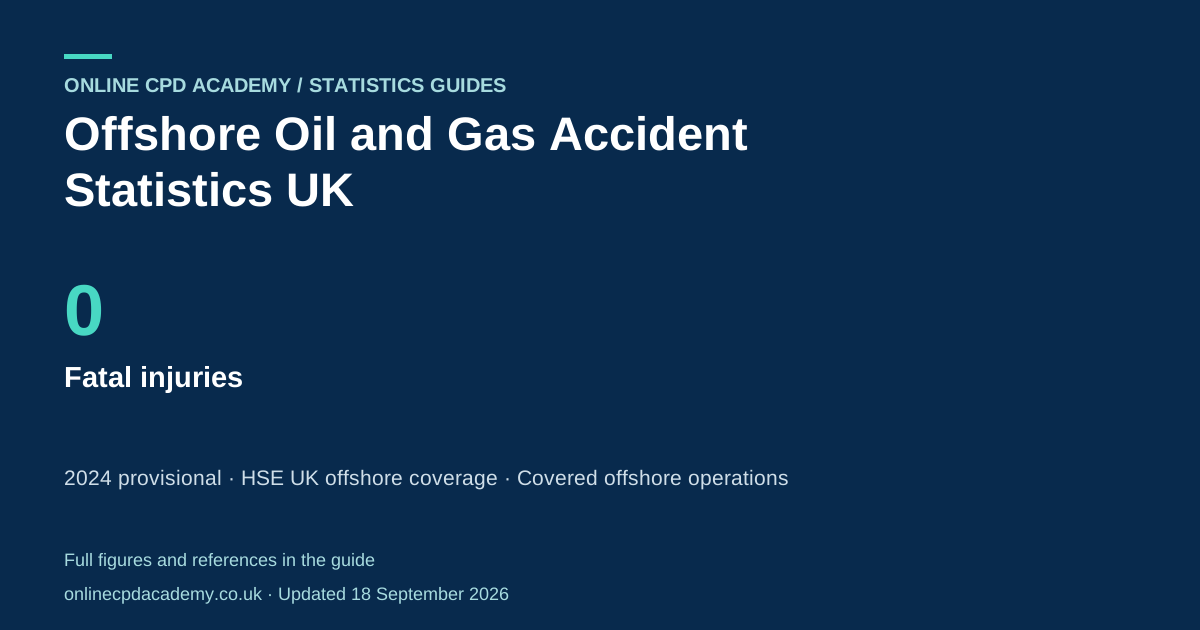
HSE recorded no fatal injuries and 107 non-fatal injuries in its UK offshore statistics for 2024. The same report records 180 dangerous occurrences and 92 hydrocarbon releases, which use different reporting definitions.
Key statistics at a glance
| Statistic | Figure | Period and coverage |
|---|---|---|
| Fatal injuries | 0Covered offshore operations | 2024 provisional HSE UK offshore coverage |
| Non-fatal injuries | 10712 specified; 95 over-seven-day injuries | 2024 provisional HSE UK offshore coverage |
| Reported injury rate | 462 per 100,000 FTENot directly comparable with other industry rates | 2024 provisional HSE UK offshore coverage |
| Dangerous occurrences | 180RIDDOR reports | 2024 provisional HSE UK offshore coverage |
| Hydrocarbon releases | 9257 RIDDOR; 35 only Offshore Directive reporting | 2024 provisional HSE UK offshore coverage |
HSE’s annual offshore report covers calendar 2024, published September 2025. Latest-year figures are provisional. It covers offshore operations and excludes most journeys to or between installations by sea or air.
Offshore injuries in 2024
HSE recorded no fatal injuries and 107 non-fatal injuries in the covered offshore operations during 2024. The non-fatal total comprises 12 specified injuries and 95 injuries causing more than seven days of incapacity.
The reported injury rate was 462 per 100,000 full-time-equivalent workers. HSE calculates the offshore workforce denominator using presence offshore, so this rate is not directly comparable with conventional employment-based rates for other industries.
Hydrocarbon releases and dangerous occurrences
There were 180 reported dangerous occurrences under RIDDOR in 2024. These included 57 hydrocarbon releases, approximately 32% of the total.
A further 35 releases met Offshore Directive reporting criteria only, bringing the combined hydrocarbon-release count to 92. Of those 92 releases, 41 were non-process releases. The two reporting systems therefore contribute different parts of the overall release total.
Inspection activity and major hazards
HSE carried out 125 inspections at 102 installations during 2024. Inspections and reports of dangerous events help assess the control of major hazards alongside the injury figures.
A March 2025 HSE collision warning highlighted poor watchkeeping, situational awareness and communication involving attendant vessels. It called for dutyholders to assess collision risks and ensure that vessels can operate safely around installations.
What the offshore data covers
The report excludes vessels and rigs in transit and most flights between installations or shore. Helicopter incidents on an installation are included. This scope means the figures describe covered offshore operations, rather than every injury associated with offshore employment.
Safety cases and continuing risk control
Offshore dutyholders must demonstrate how major accident risks are controlled. An accepted safety case is required before an installation operates, together with arrangements for equipment integrity and emergency response.
Under SCR 2015, a thorough safety-case review is required at intervals of no more than five years. Material revisions follow a separate process and do not automatically restart the review timetable.
Piper Alpha and the importance of handover
The Piper Alpha disaster on 6 July 1988 killed 167 people. The Cullen inquiry made 106 recommendations, shaping subsequent offshore safety practice.
HSE identifies failures in shift handover among the contributing factors. Its handover guidance calls for written and spoken information, opportunities to ask questions and a clear account of plant conditions and unfinished work.
Frequently asked questions
Which year do the latest HSE offshore figures cover?
The latest listed annual HSE offshore report covers 2024 and was published in September 2025. Its latest-year figures are provisional.
Can the offshore injury rate be ranked against construction?
HSE says the offshore rate is not directly comparable with other industry rates because the workforce denominators are defined differently.
Does a zero offshore fatality count include helicopter transit?
No. Most air transport to, from or between installations lies outside this report's scope. Incidents involving helicopters while on an offshore installation are included.
Using these statistics?
Please credit Online CPD Academy and link to this guide when using these statistics in an article, report or website.
Suggested citation: Online CPD Academy, Offshore Oil and Gas Accident Statistics UK: HSE Figures, updated 18 September 2026.
Sources
- HSE — Offshore Statistics and Regulatory Activity Report 2024
- HSE — Offshore statistics publication index
- HSE — Risk of collision between offshore installations and attendant vessels, ED01-2025
- HSE — Offshore health and safety law
- HSE and OPRED — Offshore Major Accident Regulator guidance
- UK Parliament — Piper Alpha disaster debate
- HSE — Human factors: shift handover
From food hygiene and fire safety to first aid, mental health and more, we offer a wide range of accredited, online courses you can start today.
Browse all 22 accredited courses →
Mark writes about workplace health and safety, compliance and accredited online training for Online CPD Academy. About Online CPD Academy.