
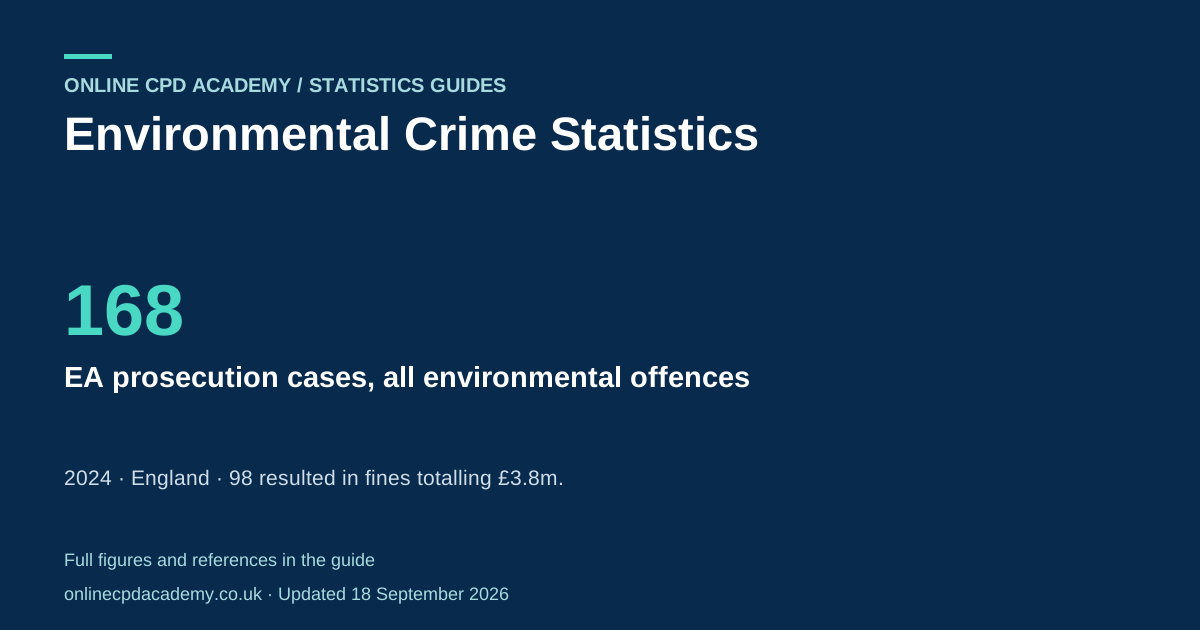
The Environment Agency reported 168 prosecution cases across environmental offences in England in 2024. Water-company offences accounted for six prosecutions and £3.527 million in fines. More recent releases also track inspections, illegal waste sites and environmental undertakings.
Key statistics at a glance
| Statistic | Figure | Period and coverage |
|---|---|---|
| EA prosecution cases, all environmental offences | 16898 resulted in fines totalling £3.8m. | 2024 England |
| Water-company prosecutions and fines | 6; £3,527,000Four companies; calendar year. | 2024 England |
| Waste-sector prosecutions | 34Around £320,000 fines and 37 custodial sentences. | 2024 England |
Environment Agency activity in England. Prosecution figures use calendar years; operational results use financial years. A June 2026 parliamentary answer covers its own stated reporting window. These series overlap.
Environmental prosecutions and fines
The Environment Agency’s 2024 figures cover 168 prosecution cases across environmental offences. Ninety-eight resulted in fines, totalling £3.8 million. In the waste sector, 34 prosecutions resulted in around £320,000 in fines and 37 custodial sentences.
For water companies, all offences produced six prosecutions and £3,527,000 in fines. The narrower water-quality series recorded five prosecutions and £3,502,000. The difference reflects offence coverage. A case completed during a year may concern an incident from an earlier year.
Recent water-company enforcement
In an update published on 10 April 2026, the Environment Agency reported 69 concluded water-company prosecutions since 2015 and more than £153 million in fines.
A June 2026 parliamentary answer records 254 enforcement actions for water-quality incidents between 1 June 2025 and 2 June 2026. These included three prosecutions with £1,622,333 in fines and 19 undertakings valued at £8,148,000. This is a separate reporting window from the calendar-year and financial-year figures.
Enforcement undertakings: £8.5 million in 2025/26
The accepted water-company undertakings list for April 2025–March 2026 contains 20 agreements worth £8,505,424. An undertaking is a voluntary agreement accepted by the regulator, with commitments to repair harm or fund environmental improvements. A criminal fine follows court proceedings.
The Chief Regulator’s report also describes over £15 million directed to environmental improvements through undertakings over five years across regulated sectors. That wider figure includes sectors beyond water companies.
Water inspections more than doubled
The Environment Agency completed 10,784 water-company compliance inspections in 2025/26, compared with 4,626 the previous year. It exceeded its target of 10,000 inspections and also stopped 224 high-risk illegal waste sites.
These figures describe regulatory activity. An inspection can confirm compliance, identify improvements or prompt further investigation; stopping an illegal site is a separate operational outcome from a prosecution.
The estimated cost of waste crime
The 2025 National Waste Crime Survey cites an estimate of £1 billion a year in England, drawn from Environmental Services Association research published in 2021. This describes the estimated economic burden of waste crime rather than the value of fines or a new measurement of 2025 losses.
Water-company penalty reform
In its July 2026 consultation response, Defra said it would bring forward secondary legislation for new water-company penalties, subject to Parliamentary approval. That response sets out the proposed next step; the commencement and detailed operation of any new penalties depend on the legislation.
Frequently asked questions
How many environmental prosecution cases did the Environment Agency report?
The Environment Agency reported 168 prosecution cases across environmental offences in England in 2024. This measures concluded enforcement activity, not every environmental offence committed.
What is the difference between a fine and an enforcement undertaking?
A fine is imposed through criminal proceedings. An enforcement undertaking is a voluntary agreement accepted by the regulator to address harm or support environmental improvements.
Why are there different water-company prosecution totals?
Reporting windows and offence coverage differ. The 2024 water-quality-only total excludes a prosecution included in the all-offence water-company figure.
Using these statistics?
Please credit Online CPD Academy and link to this guide when using these statistics in an article, report or website.
Suggested citation: Online CPD Academy, Environmental Crime Statistics: England Prosecutions and Fines, updated 18 September 2026.
Sources
- Environment Agency — Chief Regulator’s report 2024–25: supporting evidence
- Defra and Environment Agency — Accepted water-company enforcement undertakings, April 2025–March 2026
- Environment Agency — Annual report and accounts 2025–26, performance measures
- Defra — Parliamentary answer 5553: water-company enforcement actions
- Defra — New penalties for water-company offences: government consultation response
- Environment Agency — National Waste Crime Survey 2025: results and findings
- Environment Agency — United Utilities prosecution update and cumulative water-company total
- Environment Agency — Water and sewerage companies: pollution incident report 2016–2024
- Environment Agency — 2024 water-company environmental performance announcement
From food hygiene and fire safety to first aid, mental health and more, we offer a wide range of accredited, online courses you can start today.
Browse all 22 accredited courses →
Mark writes about workplace compliance, environmental regulation and accredited online training for Online CPD Academy, drawing on the latest UK enforcement data and legislation.