
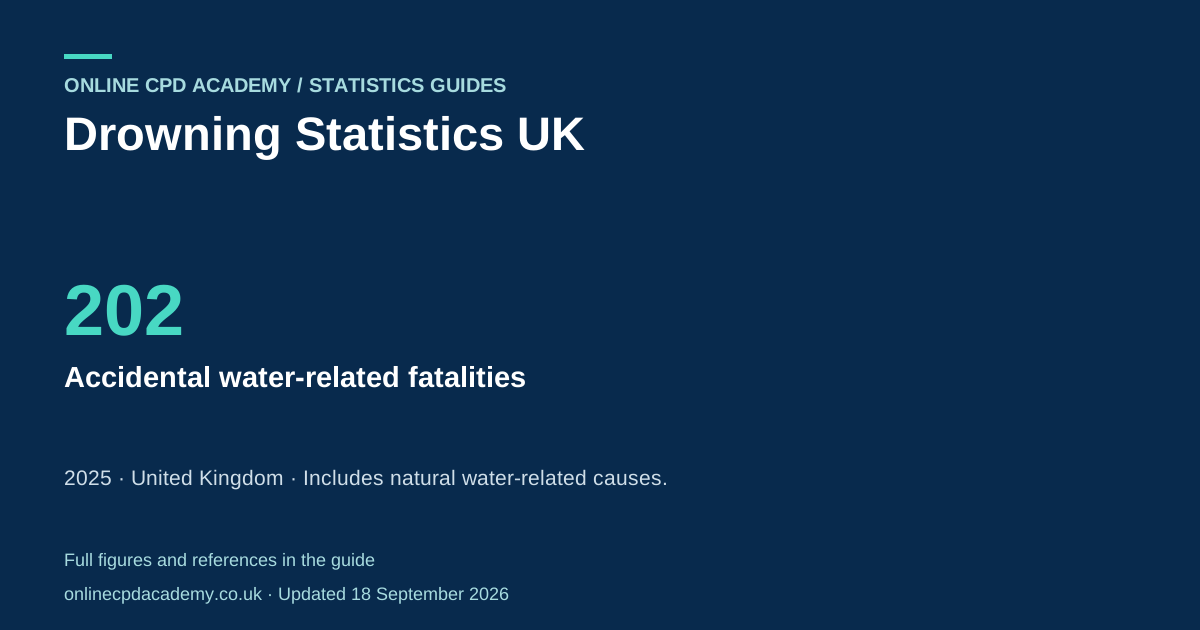
The UK recorded 202 accidental water-related fatalities in 2025, within 587 water-related deaths from all recorded causes. Men accounted for 85% of accidental fatalities, and inland waters accounted for 57% in the report’s location analysis.
Key statistics at a glance
| Statistic | Figure | Period and coverage |
|---|---|---|
| Accidental water-related fatalities | 202Includes natural water-related causes. | 2025 United Kingdom |
| All-cause water-related fatalities | 587Includes categories other than accidents. | 2025 United Kingdom |
| Male share of accidental fatalities | 85%Published rounded proportion. | 2025 United Kingdom |
| Inland-water share in location analysis | 57%Figure 5 includes 171 fatalities and excludes 31 in ungrouped activities. | 2025 United Kingdom |
| Accidental water-related fatalities | 193Earlier annual release; interpret trends cautiously. | 2024 United Kingdom |
WAID 2025 UK summary, version 1.1. The accidental category includes suspected or confirmed accidents and natural water-related causes; some outcome classifications remain unresolved.
How many accidental water deaths were recorded?
WAID recorded 202 accidental water-related fatalities in 2025, compared with 193 in 2024. The difference is nine deaths, or a calculated 4.7% increase.
The all-cause 2025 total was 587. That broader total includes other recorded outcomes. WAID classifications can change as cases are resolved, and older records have had more time for review; the year-to-year figures reflect those recording conditions.
Where and when did fatalities occur?
Inland waters accounted for 57% of cases in the location analysis. Location percentages use cases included in that chart, rather than every case in the headline total.
Men accounted for 85% of accidental fatalities. August had the highest monthly count in the 2025 summary, and males aged 60–69 had the highest count and population rate in the age analysis.
What the water-fatality figures include
Water-related fatalities can involve recreation, everyday activities and other circumstances. Fatality counts measure deaths; rescues and non-fatal drowning incidents require separate records.
Chart denominators vary because some analyses exclude ungrouped activities, including bathing, residential and unknown activities. For example, the 2024 location and activity charts each used 160 cases and excluded 33 from the headline accidental total of 193. The 2024 activity figure of 37% referred to everyday activities such as walking, running and commuting.
Cold water and unexpected immersion
Water below 15°C can cause cold water shock, affecting breathing and movement. Inland water can remain cold even when the air feels warm.
RNLI advice for someone in difficulty is to float: tilt the head back with ears submerged, relax breathing and move the hands and legs gently if needed. Once breathing is controlled, call for help or swim to safety if able. Floating can be practised in a supervised setting.
Understanding location and age patterns
A count identifies where deaths were recorded and which groups were affected. A population rate also takes the size of an age group into account. Assessing risk per visit or hour in the water would additionally require participation data.
These measures help explain why a high count at one location or in one age group should be read alongside the denominator used.
Frequently asked questions
How many accidental water deaths occurred in the UK in 2025?
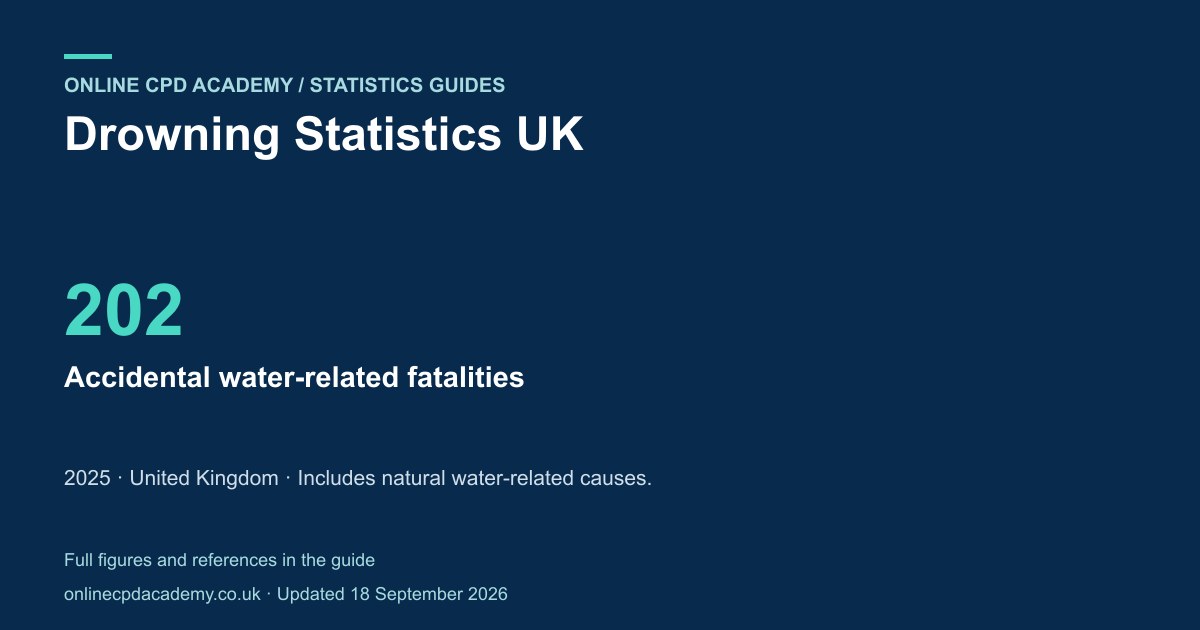
WAID recorded 202 accidental water-related fatalities. Its category includes suspected or confirmed accidents and natural water-related causes.
Who accounted for most accidental water fatalities?
Men accounted for 85% in the 2025 summary. Males aged 60–69 had the highest count and population rate in the age analysis.
Where did most recorded accidental water fatalities happen?
Inland waters accounted for 57% of cases in the report’s location analysis, which excludes cases outside that chart’s coverage.
Using these statistics?
Please credit Online CPD Academy and link to this guide when using these statistics in an article, report or website.
Suggested citation: Online CPD Academy, Drowning Statistics UK: Water Fatalities and Trends (2026), updated 15 October 2026.
Sources
From food hygiene and fire safety to first aid, mental health and more, we offer a wide range of accredited, online courses you can start today.
Browse all 22 accredited courses →
Mark writes about workplace health and safety, compliance and accredited online training for Online CPD Academy. About Online CPD Academy.